
India has made remarkable progress through the Swachh Bharat Mission. Millions of toilets have been built, sanitation awareness has increased, and countless citizens have participated in cleanliness campaigns. Across the country, people have embraced the message that cleanliness is everyone’s responsibility.
Yet, one important question remains.
Has every Indian experienced the full promise of a Swachh Bharat?
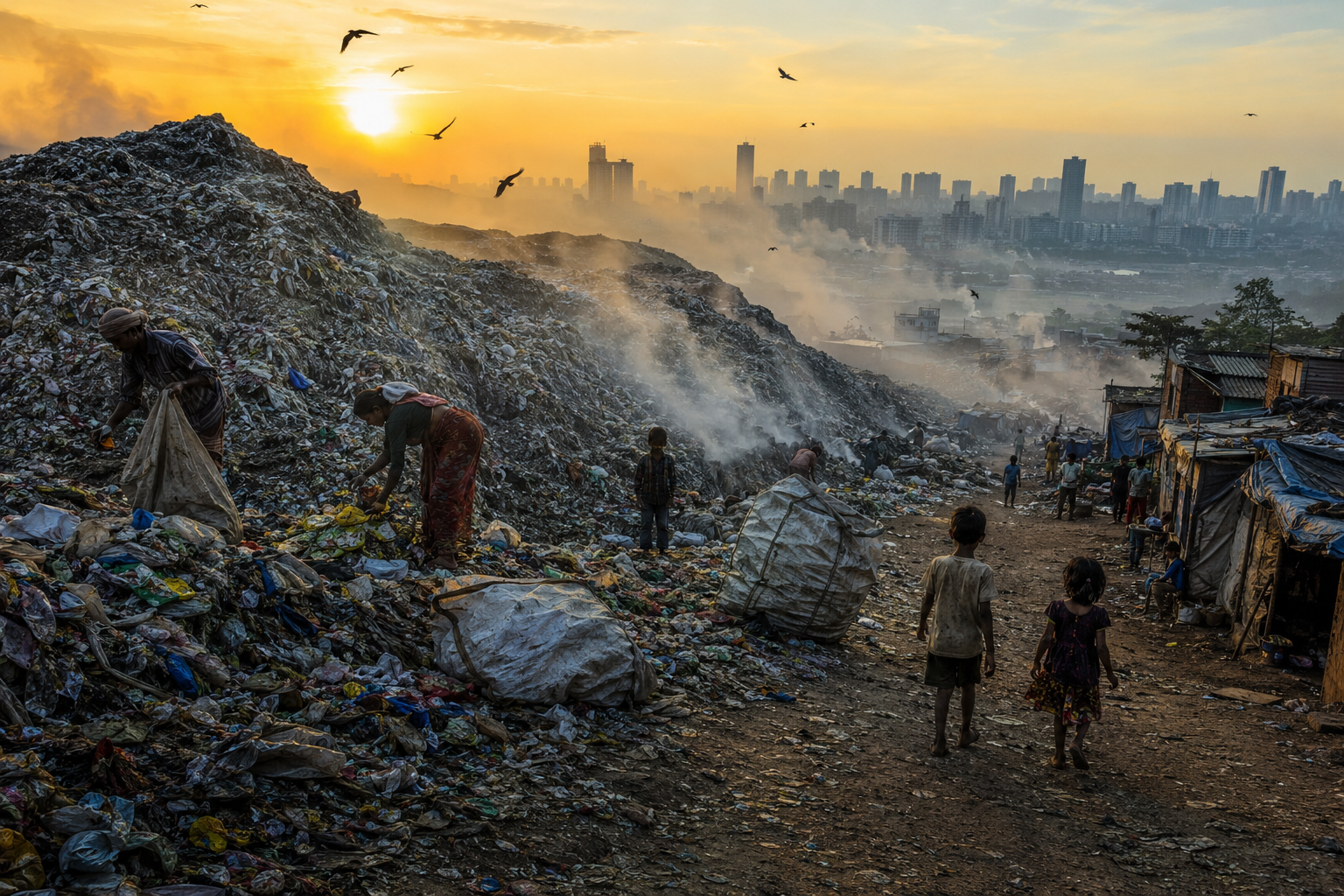
This question becomes especially relevant when we look at communities living around the Deonar Dumping Ground in Mumbai and parts of Nathupur in Gurugram.
Deonar, one of India’s oldest landfill sites, has stood for nearly a century. Every day, thousands of tonnes of municipal waste have historically been transported to this area. While the landfill has supported Mumbai’s waste disposal system for decades, nearby communities have also lived with environmental challenges, smoke from landfill fires at times, unpleasant odours, and concerns about health and sanitation.
Just as concerning are reports from residents of Nathupur, Gurugram, where issues related to garbage dumping, sanitation, drainage, and civic maintenance have periodically been raised. Despite being located near one of India’s fastest-growing corporate hubs, some localities continue to struggle with basic civic infrastructure.
These realities do not diminish the achievements of the Swachh Bharat Mission. Rather, they remind us that the mission’s success depends on ensuring that every community benefits from clean surroundings, safe sanitation, and effective waste management.
The people living in these neighbourhoods are not outsiders.
They are Indians.
They contribute to the nation’s economy, work hard to support their families, educate their children, and aspire to live with dignity. Many informal waste pickers around Deonar perform valuable recycling work that helps recover reusable materials from the city’s waste stream. Their contribution to environmental sustainability often goes unnoticed.
This article is not written to criticise any individual public servant. Across India, many government officials and sanitation workers perform difficult jobs with dedication. However, in a democracy, citizens have the right—and responsibility—to ask constructive questions about public services and accountability.
If taxpayer money is allocated for sanitation, waste management, and urban development, how effectively is it reaching communities that continue to face these challenges?
If redevelopment and waste management projects have been announced, how are they improving the daily lives of nearby residents?
If every Indian deserves a clean and healthy environment, what additional steps are needed to ensure that communities living near major waste disposal sites or underserved urban settlements are not left behind?
These questions are not an attack on India.
They are asked because we believe India can do better.
The vision of Swachh Bharat is larger than clean roads or public campaigns. It is about protecting public health, ensuring scientific waste management, reducing pollution, strengthening local governance, and treating every citizen with equal dignity.
Real change cannot come from governments alone.
It requires cooperation between citizens, local communities, municipal bodies, researchers, environmental experts, educational institutions, businesses, and civil society organisations.
Every student can volunteer.
Every resident welfare association can organise cleanliness drives.
Every NGO can support education, health, or sanitation initiatives.
Every corporate organisation can strengthen its social responsibility efforts.
Every journalist can report responsibly.
Every citizen can segregate waste and hold public institutions accountable through lawful and constructive engagement.
The people of Deonar and Nathupur do not ask for sympathy.
They ask for opportunity.
They ask for clean surroundings.
They ask for safe drinking water, better sanitation, healthier neighbourhoods, and a future where children grow up with hope rather than environmental hardship.
A nation’s greatness is not measured only by its tallest buildings or strongest economy. It is also measured by how it cares for communities facing the greatest challenges.
Swachh Bharat is not merely a government programme.
It is a national promise.
A promise that every Indian deserves to breathe clean air, drink safe water, live in a hygienic environment, and enjoy the dignity guaranteed by the Constitution.
Until every neighbourhood experiences that promise, our work is not complete.
This is not someone else’s India.
This is our India.

Let us come together—not to assign blame, but to build solutions.
Because a cleaner India begins when no community is forgotten.
Written by Rahat Ali



Add comment