
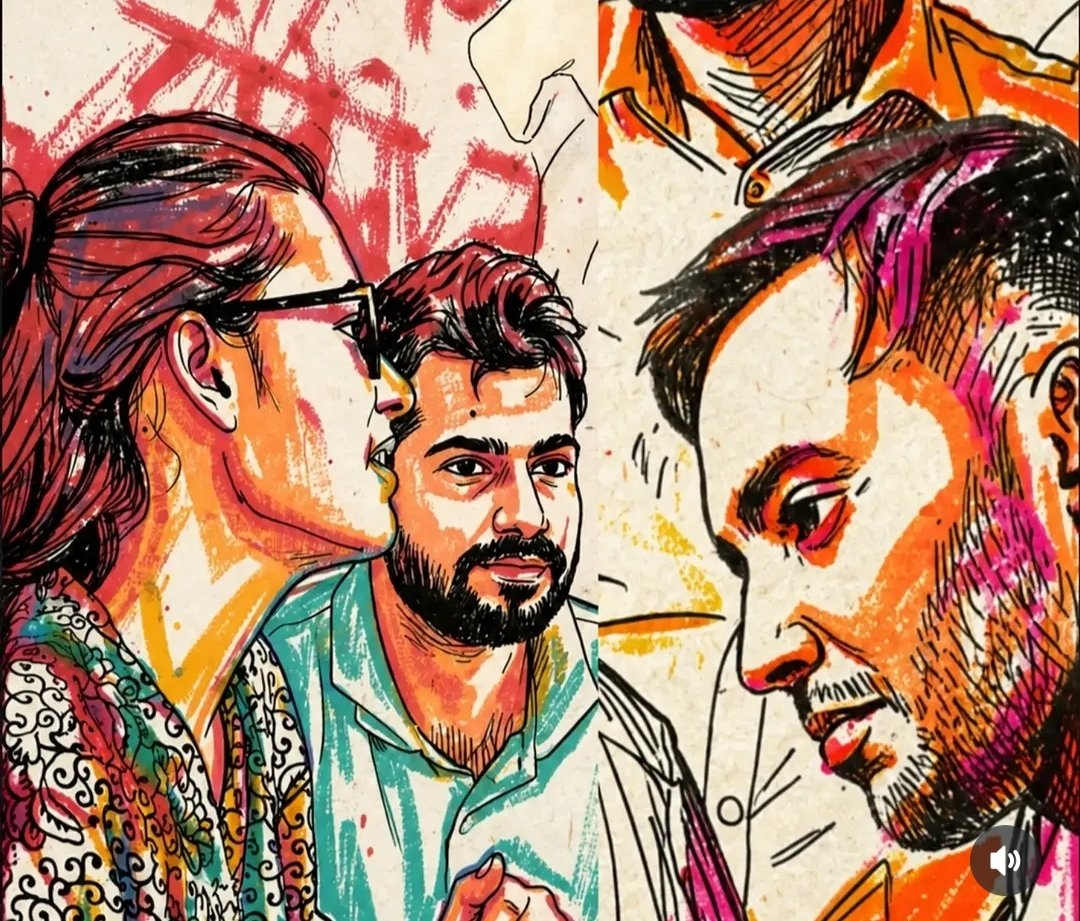
A Fictional Story from The Uncommon Stories of India Written By Rahat Ali
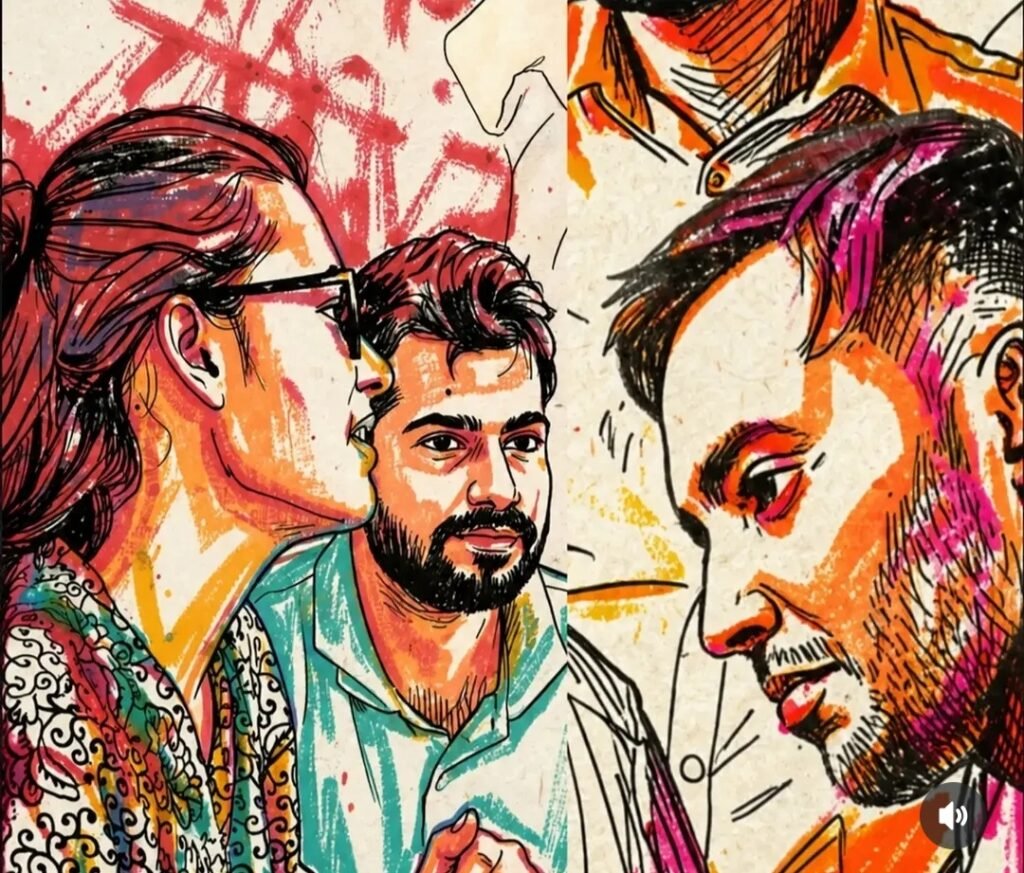
Disclaimer: This is a fictional story inspired by the aspirations of millions of students across India. It is not based on a verified historical event or specific individuals.
The city of Delhi had witnessed countless protests, countless speeches, and countless promises, but one quiet morning at Jantar Mantar, six young students arrived carrying nothing more than hope. They came from different corners of India, spoke different languages, belonged to different faiths and backgrounds, yet they were united by a single dream—to build an India where no child would ever be denied education because of poverty, where no family would lose a loved one because healthcare was unaffordable, and where every citizen, regardless of caste, religion, gender, geography or financial status, would receive an equal opportunity to succeed. They did not seek power, fame or political recognition. They simply believed that the strength of a nation is measured not by the wealth of a few, but by the dignity and opportunities available to every citizen.
Their silent hunger strike was unlike any demonstration people had seen before. There were no slogans of hatred, no attacks against any community or institution, and no demands for personal gain. Before them lay three handwritten placards that read: “Free Education for Every Child,” “Universal Healthcare for Every Citizen,” and “Equal Opportunities for Every Dream.” Curious pedestrians paused to read the words, journalists gathered with cameras, and soon the story spread across the country. When asked what they wanted, one of the students quietly replied, “We are not asking for charity. We are asking for justice. A nation that invests in education and healthcare invests in its own future.” His words echoed far beyond the streets of Delhi and began touching hearts across India.
Each of the six students carried a story that represented millions. One had walked several kilometres every day to attend a government school because there was no transport in his village. Another had watched her father sell family land to pay medical bills, only to lose him because treatment came too late. One dreamed of becoming a doctor but feared the cost of higher education. Another wished to become a scientist and bring innovation to rural India. One wanted to become a teacher so no child would ever feel abandoned in a classroom, while another believed public service was the highest form of patriotism. Though their dreams were different, their destination was the same—an India where talent would never be defeated by poverty.
As the days passed, the students grew physically weaker, but their determination became stronger. Doctors urged them to end the fast, parents wept beside them, and friends begged them to return home, yet they remained peaceful and resolute. They believed that sometimes silence speaks louder than speeches and that sacrifice can awaken a nation’s conscience. Every day, ordinary citizens began gathering around them.
Teachers left books as symbols of knowledge, doctors organised free medical camps for visitors, volunteers distributed drinking water, artists painted murals celebrating hope, and schoolchildren placed flowers beside the students. For a brief moment, people forgot their differences and remembered that every child, regardless of background, deserved a fair chance to dream.
An elderly freedom fighter visited the gathering one evening. Looking at the students with moist eyes, he said, “My generation fought to free India from colonial rule. Your generation is reminding us that freedom must also mean freedom from ignorance, inequality and preventable suffering.” His words touched everyone present. Economists debated how public education and healthcare could strengthen the nation, professors discussed equality in classrooms, social workers spoke about justice, and young entrepreneurs pledged scholarships for deserving students. What began as the determination of six young minds slowly transformed into a national conversation about the future India deserved.
The students repeatedly reminded everyone that education was not an expense but an investment, that healthcare was not a privilege but a fundamental human necessity, and that equal opportunity was the foundation of a strong democracy. They believed that no child should have to abandon school because of poverty, no patient should lose life because treatment was unaffordable, and no talented young person should watch opportunities disappear simply because of the circumstances of birth. They imagined schools equipped with libraries, laboratories and trained teachers in every village, hospitals where treatment depended on need rather than income, and universities where merit opened doors instead of wealth.
One afternoon, a little girl carrying an old school bag approached the students. Looking at them with innocent eyes, she asked, “Will I be able to study in a good school one day?” For a few moments, silence filled the air. Finally, one of the students smiled gently and replied, “That is exactly why we are here.” Those words became the heart of their movement. They were not protesting for themselves; they were speaking for every child who had never been given the opportunity to realise their potential.
Whether their hunger strike ultimately succeeded or failed became less important than the questions they left behind. What defines the progress of a nation? Is it the height of skyscrapers, the number of highways, or the size of the economy? Or is true progress reflected in a classroom where every child learns with dignity, in a hospital where every patient receives timely care, and in a society where opportunity belongs to all instead of a fortunate few? Their message inspired teachers to establish community libraries, doctors to organise free health camps, students to mentor disadvantaged children, and citizens to contribute to scholarships and social initiatives. Their dream became larger than six individuals; it became the dream of countless Indians who believed that compassion and equality could build a stronger republic.
Years later, people no longer remembered the names of the six students as much as they remembered the ideals they represented. There was no grand memorial, no towering monument and no statue in their honour. Their true memorial existed in every child who entered a classroom with confidence, every patient treated with dignity, every scholarship awarded to a deserving student, every village library opened, and every citizen who believed that the Constitution’s promise of equality should be experienced in everyday life. The greatest tribute to their courage was never another hunger strike—it was the continued effort to create an India where education is accessible, healthcare is affordable, and opportunity is shared by everyone.
Their story reminds us that history is not shaped only by kings, governments or famous leaders. Sometimes history is quietly written by ordinary people who refuse to stop believing in extraordinary possibilities. The six students never wished to become heroes; they only hoped to remind the nation that the future of India is built not in the halls of power alone but in classrooms, hospitals, laboratories, libraries and the dreams of its young people. Their message continues to echo across generations: a truly developed nation is one where no child is forced to sacrifice a dream because of poverty, no family is pushed into despair because of illness, and no citizen is denied an opportunity simply because of the circumstances of birth. The future they imagined remains a responsibility shared by all of us, for the strongest nations are those that choose humanity over indifference, equality over privilege, and hope over despair.
Published By : The Uncommon Stories Of India


2 comments
Chandra Paul
Powerful and thought-provoking, Real progress,Thank you for sharing this vision.
Chandra Paul
Thank you for sharing this vision.