
Inspired by the case study prepared by Dr. Shalu Bharadwaj (Uttar Pradesh).
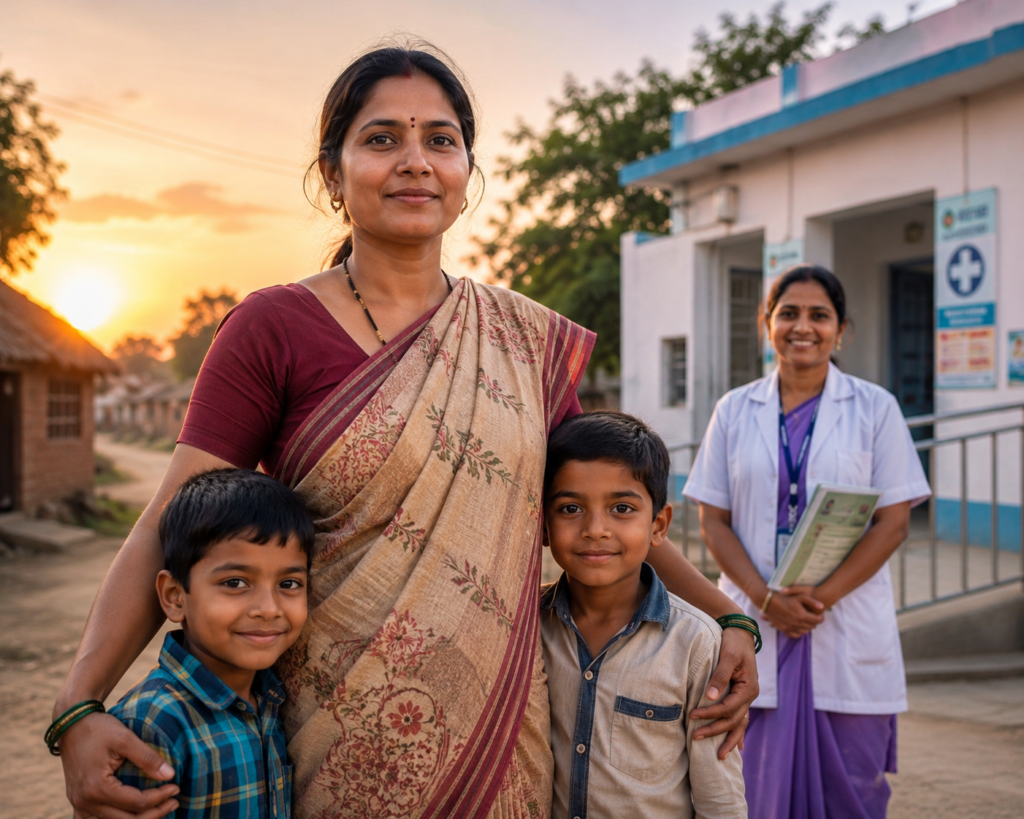
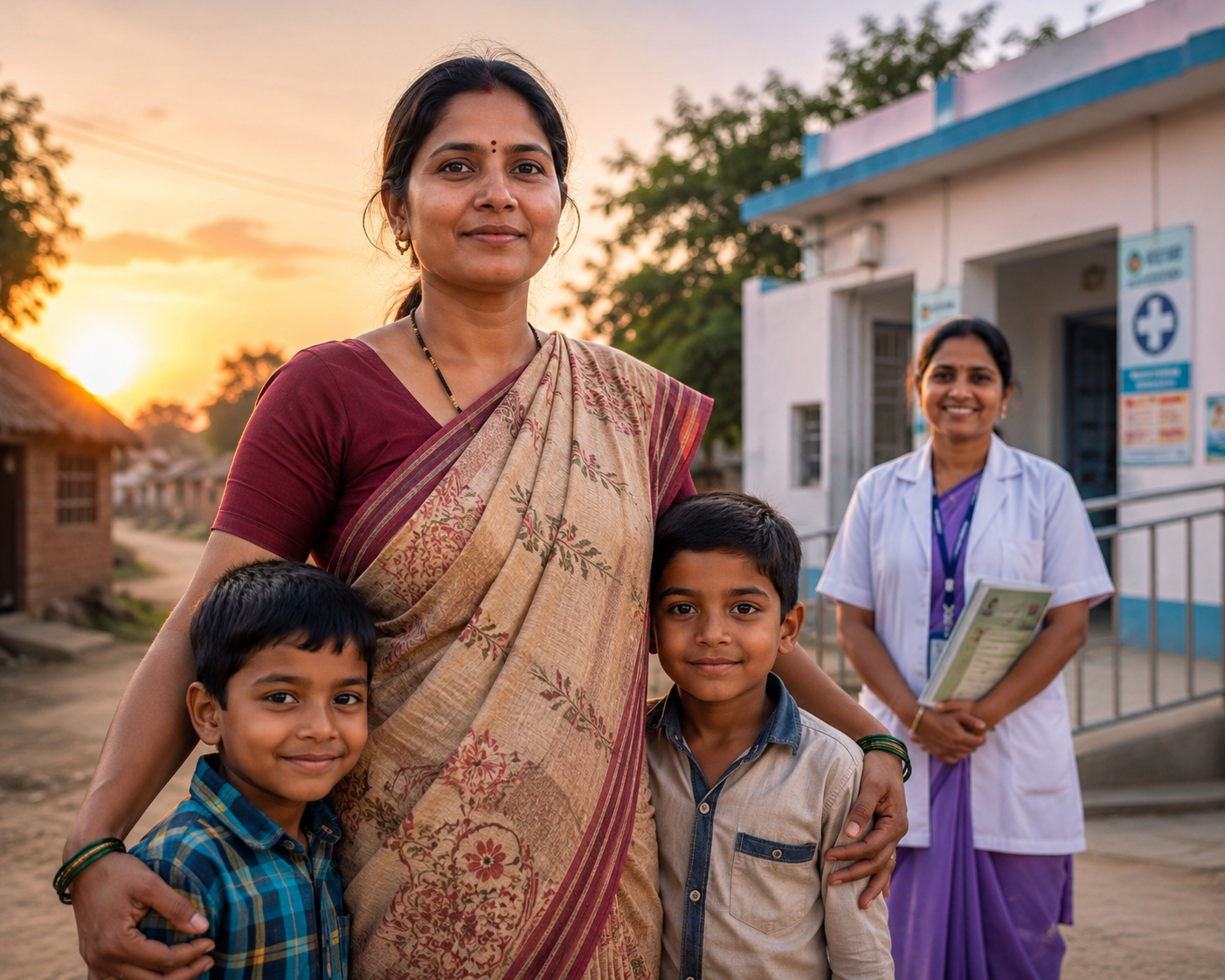
Once upon a time, in a modest town tucked away in the heart of Uttar Pradesh, where narrow lanes echoed with the laughter of children and the silent struggles of women remained hidden behind closed doors, lived a woman whose story would one day become a symbol of courage and transformation. She was only thirty-two years old, a mother of two energetic boys, and a telecaller working long hours to earn a living. To the outside world, she appeared like countless other women balancing work and family. Yet behind her gentle smile lay years of pain, sacrifice, shattered dreams, and a relentless battle to reclaim control over her own life. Her journey was not simply about motherhood or employment; it was about discovering that the greatest power any woman can possess is the right to make decisions about her own body, her own health, and her own future.
She had entered marriage with dreams as vibrant as the marigold flowers decorating her wedding ceremony. Like many young brides, she believed that love, mutual respect, and hope would guide her through life’s challenges. Together, she and her husband dreamed of building a happy family. However, neither of them possessed adequate knowledge about reproductive health or the importance of spacing pregnancies. Conversations surrounding contraception and family planning were considered embarrassing or even sinful in their community. Such subjects were rarely discussed openly, leaving countless couples to rely on myths, assumptions, and social pressure instead of medical guidance.
Within a few years, what began as a hopeful marriage slowly transformed into a painful cycle of repeated pregnancies and heartbreaking miscarriages. Every pregnancy filled her heart with anticipation, but every loss left invisible scars that no medicine could heal. Her body weakened with every miscarriage. Nights became sleepless, not because of crying infants, but because of silent tears shed into her pillow while everyone else slept. The physical pain gradually merged with emotional exhaustion, making each day feel heavier than the last. Yet society rarely asked about her suffering. Instead, people questioned her ability to bear children successfully, never realizing that her health was quietly deteriorating under the burden of repeated unplanned pregnancies.
Initially, her husband agreed to use a male contraceptive method, offering her a glimmer of hope that together they could prevent another unwanted pregnancy. Unfortunately, his commitment proved inconsistent. Over time, his cooperation faded, and the responsibility of preventing pregnancy once again rested entirely upon her shoulders. She realized that promises alone could not protect her health. Every missed precaution carried consequences that only she had to endure physically and emotionally.
As financial pressures mounted, another painful reality emerged. Her husband gradually distanced himself from his responsibilities toward the family. Household expenses increased while emotional support disappeared. The burden of caring for her children, managing household duties, and supporting extended family members slowly became hers alone. Instead of surrendering to despair, she searched for employment and eventually found work as a telecaller in a call centre. The salary was modest, but every rupee she earned represented dignity rather than dependence. Every phone call she handled reminded her that she was stronger than circumstances had led her to believe.
Balancing office responsibilities with motherhood demanded extraordinary resilience. She woke before sunrise to prepare meals, get her children ready, complete household chores, and travel to work. After returning home, another shift awaited her—helping with homework, cooking dinner, caring for family members, and preparing for the following day. Fatigue became her constant companion, yet she refused to allow hardship to define her identity. Somewhere amidst this exhausting routine, she discovered an important truth: while she could not force others to change, she could choose to change her own future.
This realization became the turning point of her life.Determined to protect both her health and her future, she sought help from the local Auxiliary Nurse Midwife (ANM). Unlike many voices in society that judged women for seeking contraception, the ANM listened without criticism. She patiently explained modern family planning options and introduced her to an injectable contraceptive, a long-acting reversible contraceptive method that could provide reliable protection against unintended pregnancy. For the first time, someone explained reproductive healthcare not as a taboo subject but as an essential component of women’s wellbeing.
Despite receiving professional guidance, fear remained. Her community was filled with frightening rumours. Some believed contraceptive injections caused permanent infertility. Others claimed they destroyed women’s health or invited social disgrace. These myths had travelled across generations, discouraging countless women from seeking medical advice. Friends, neighbours, and relatives repeated warnings without scientific evidence, creating an atmosphere where misinformation overshadowed truth.
She stood at a crossroads between fear and hope.Choosing courage over rumours, she received her first injection. During the initial months, she experienced temporary irregularities in her menstrual cycle. Instead of abandoning treatment because of community gossip, she returned to the District Hospital, where trained healthcare professionals counselled her about expected side effects and reassured her that these changes were temporary for many women. Their guidance replaced fear with confidence. She decided to continue. Gradually, her body adjusted, her anxiety diminished, and she experienced something she had almost forgotten—peace of mind.
For years she had lived under the constant shadow of another unintended pregnancy. That shadow finally disappeared.Her health improved. Her confidence blossomed. She focused on raising her children with renewed energy. She performed better at work because she was no longer overwhelmed by uncertainty. Financial planning became possible because unexpected pregnancies no longer threatened the fragile stability she had worked so hard to build. The freedom to make informed reproductive choices transformed every aspect of her life.
The transformation did not go unnoticed.Women in her neighbourhood observed the remarkable change. They had expected illness or suffering because that was what the rumours predicted. Instead, they witnessed a healthy, confident, hardworking mother who smiled more often than before. Curiosity slowly replaced suspicion. One by one, women began asking questions they had never dared to ask publicly.”Does it really work?””Were the rumours true?””Were you afraid?”Rather than lecturing them, she simply shared her own experience honestly. She explained both the temporary challenges and the long-term benefits. Her authenticity carried more weight than any awareness campaign because it came from lived experience rather than theory.One day, a fellow villager expressed a desire to learn more about injectable contraception but feared visiting the health centre alone. Without hesitation, she accompanied the woman to the health facility, offering not only information but emotional support. That simple act became the beginning of behavioural change within the community. It demonstrated that empowerment grows stronger when shared.
Her story reminds society that family planning is far more than a medical intervention. It is an instrument of equality. It protects maternal health, strengthens families, reduces financial hardship, and allows women to participate fully in education, employment, and community leadership. When women possess the freedom to make informed decisions about reproduction, entire generations benefit.
Across India, millions of women continue to face barriers similar to those she once confronted. Many remain trapped between cultural expectations and limited access to accurate health information. Some fear judgement more than illness. Others silently endure repeated pregnancies because they believe they have no alternative. Their stories often remain invisible, hidden behind walls of silence.Her journey challenges that silence.It urges husbands to become supportive partners rather than passive observers. It calls upon families to replace myths with knowledge. It reminds healthcare workers that compassionate counselling can transform lives. It encourages policymakers to ensure that quality reproductive healthcare reaches every village and every household without discrimination.Most importantly, it speaks directly to women who may still believe they have no choice.Choice exists.Help exists.Hope exists.Today, when she looks at her children, she no longer sees reminders of struggle alone. She sees the future she fought to protect. She sees two boys growing up with a mother who refused to surrender to circumstances. She hopes they will become men who respect women’s choices and support equality within their own families.Her life may never appear in history textbooks, and television cameras may never arrive at her doorstep. Yet her courage has already changed lives—first her own, then another woman’s, and gradually an entire community’s understanding of reproductive health.The most extraordinary revolutions often begin quietly. They begin when one woman decides that fear will no longer govern her life. They begin when knowledge replaces myths, when healthcare replaces stigma, and when dignity replaces dependence.Her story is not merely about contraception.It is about freedom.It is about resilience.It is about the right of every woman to live with health, dignity, and self-determination.As society continues to strive for gender equality and sustainable development, stories like hers remind us that true progress is measured not only by economic growth or technological advancement but by whether every woman has the power to say, without fear or apology:
“My body. My choice. My future.”
Written By Dr. Shalu Bharadwaj
Uttar Pradesh (India)
Published By : The Uncommon Stories Of India



Add comment